The Critic: Ada Louise Huxtable and the Building of Modern America
My new book is the first biography of the legendary Ada Louise Huxtable (1921–2013), the first full-time architecture critic in the United States. Huxtable worked at the New York Times from 1963 to 1981, winning the first Pulitzer Prize ever awarded for criticism and joining the editorial board in 1973. After writing independently for fifteen years, she served as architecture critic at the Wall Street Journal from 1997 until her death in 2013. The Critic traces Huxtable’s little-known youth in New York City, her formative travels and early published work, the highs and lows of her phenomenal career at the Times, her late-life challenges and triumphs, and her profound impact on Americans’ understanding of architecture. The book will be published by W. W. Norton in March 2027.

The Ada Louise Huxtable Papers are housed at the Getty Research Institute, part of the Getty Center complex in Los Angeles (Richard Meier & Partners, 1997). This was the scene one evening after a long day in the archives: the sun, the moon, Venus, and, if you look very closely, Orion.
Photo: Christine Cipriani

I’m thrilled to be working with Norton, a house based for the last forty years in this fabulous Shreve, Lamb & Harmon building (500 Fifth Avenue) overlooking the New York Public Library — the subject of Huxtable’s famous last stand in 2012. 500 Fifth was finished in the same year (1931) as the firm’s better-known Empire State Building.
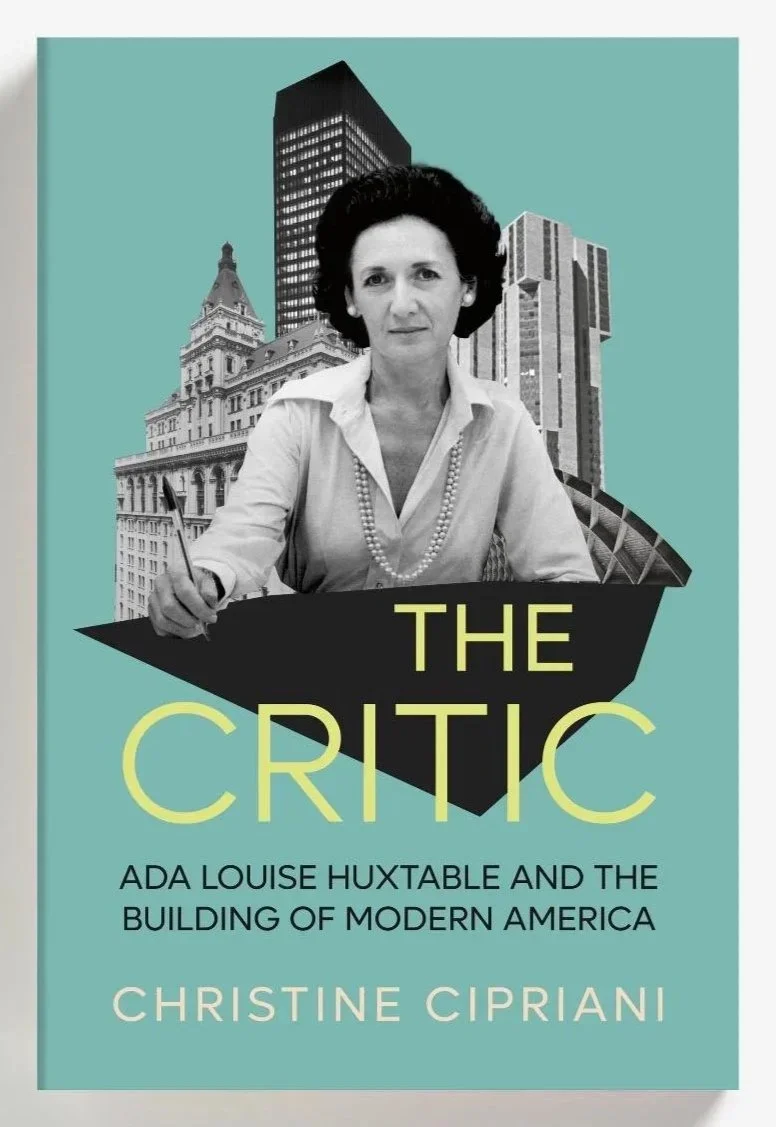
Jacket design: Jen Heuer for W. W. Norton
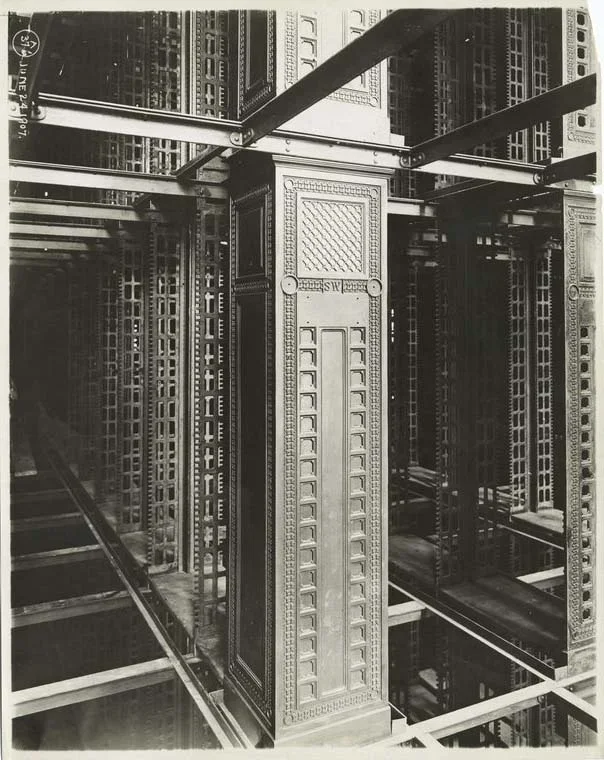
New York Public Library (Carrère & Hastings) under construction, 1907. The book stacks were custom-built of steel and cast iron by Snead & Company Iron Works. Ada Louise Huxtable’s last published piece, in 2012, aimed to save this purpose-built structure, which allowed books to be whisked up to the reading room on request.
Photo courtesy of New York Public Library Digital Collections